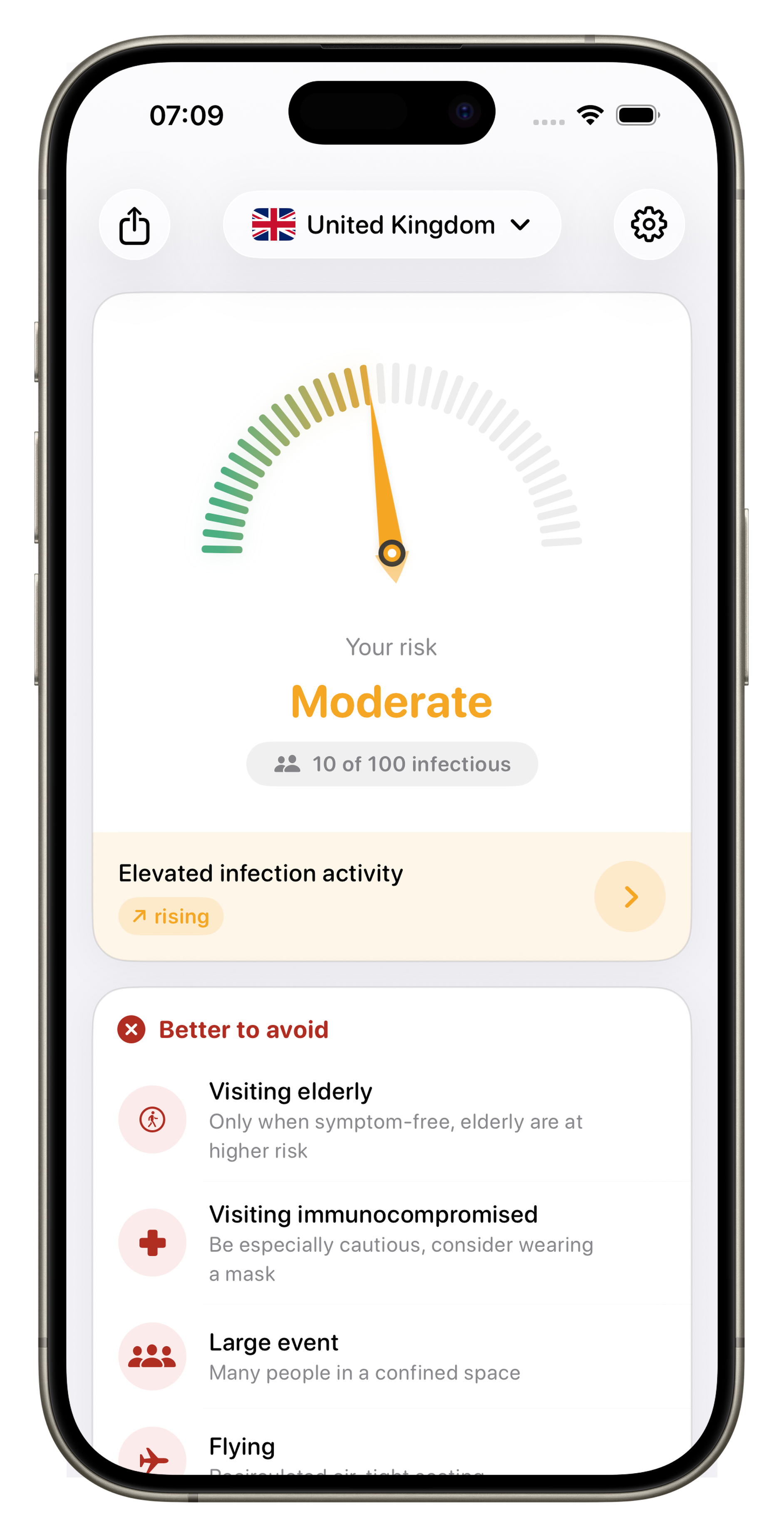
RSV activity in Germany
Current RSV (respiratory syncytial virus) activity — drawn from the Robert Koch Institute's AMELAG wastewater surveillance programme, set against the parallel flu and COVID-19 trajectories.
Current situation: RSV
In week 15 of 2026, activity of respiratory syncytial virus (RSV) in Germany is low. The trend — combining clinical surveillance and the wastewater signal — is falling. A slight downward trend has emerged over recent weeks.
The classification is based on the RKI AMELAG wastewater surveillance programme. Seasonally, infection waves in Germany typically peak between December and February; activity is usually markedly lower in spring and summer. How severe a given season becomes depends on the circulating virus variant and the population's immune status, among other factors.
Data sources and methodology
The assessment of Germany's current infection picture combines three independent surveillance systems run by the Robert Koch Institute (RKI), Germany's national public-health agency. Together they deliver a robust view of disease burden that captures both mild illness in the general population and the load on primary care.
RKI GrippeWeb
GrippeWeb is a syndromic reporting system based on voluntary reports from the public. Participants anonymously report each week whether anyone in their household has a newly emerged respiratory illness. This captures milder courses that never trigger a doctor's visit.
ARE consultation incidence (COVID-ARE)
The consultation incidence tracks how many patients seek medical care for an acute respiratory infection. It is based on sentinel practices coordinated by the Working Group on Influenza. This indicator reflects the strain on the healthcare system.
AMELAG wastewater surveillance
Wastewater surveillance (the Abwassermonitoring für eine epidemiologische Lagebewertung programme) measures viral load in sewage plants. Because pathogens are often shed before people get tested or visit a doctor, AMELAG serves as an early indicator — independent of individual testing behaviour.
Qualitative classification
The “Low”, “Moderate” and “High” categories follow seasonal reference values and epidemiological thresholds used by the RKI. The historical variability of respiratory waves is accounted for. Data is refreshed weekly, as soon as the RKI publishes its weekly report — typically on Thursdays.
Frequently asked questions
What is RSV?
Respiratory syncytial virus (RSV) is a globally common cause of respiratory infections. In healthy adults it usually behaves like a straightforward respiratory bug. It can also reach the lower airways and cause bronchiolitis or pneumonia. RSV is highly contagious and spreads via droplets or contaminated surfaces.
Who is most at risk from RSV?
Infants and young children are especially vulnerable because their airways are narrow. Premature babies and children with pre-existing heart or lung conditions are in the risk group too. Among adults, people over 60 and those with immune suppression or chronic lung disease are most at risk. In these groups RSV can lead to complications requiring hospital care. Preventive options such as antibody injections or vaccines are now available for risk groups.
When is RSV season in Germany?
Germany's RSV season runs largely in parallel with the flu wave. Infection numbers usually climb from late autumn, peak between December and February, and fade in spring. Intensity varies considerably — after periods of low exposure, RSV waves can hit especially hard because immunity in the youngest age groups has dropped.
How is RSV monitored in Germany?
RSV activity is tracked through the RKI's virological sentinel network. Samples from sentinel practices are tested at the National Reference Centre for Influenza for several pathogens, including RSV. The AMELAG wastewater signal adds complementary data. These feed into the weekly situation reports and give early warning when pressure on paediatric care is building.
How does RSV differ from flu?
Symptoms can overlap, but there are typical differences. Flu often begins with a sudden high fever, whereas RSV frequently presents with breathing difficulty or wheezing — especially in small children. RSV disproportionately affects the youngest age groups, while influenza hits the whole population. A reliable distinction often requires a lab test.
Want the actual numbers?
You'll find them in the app.
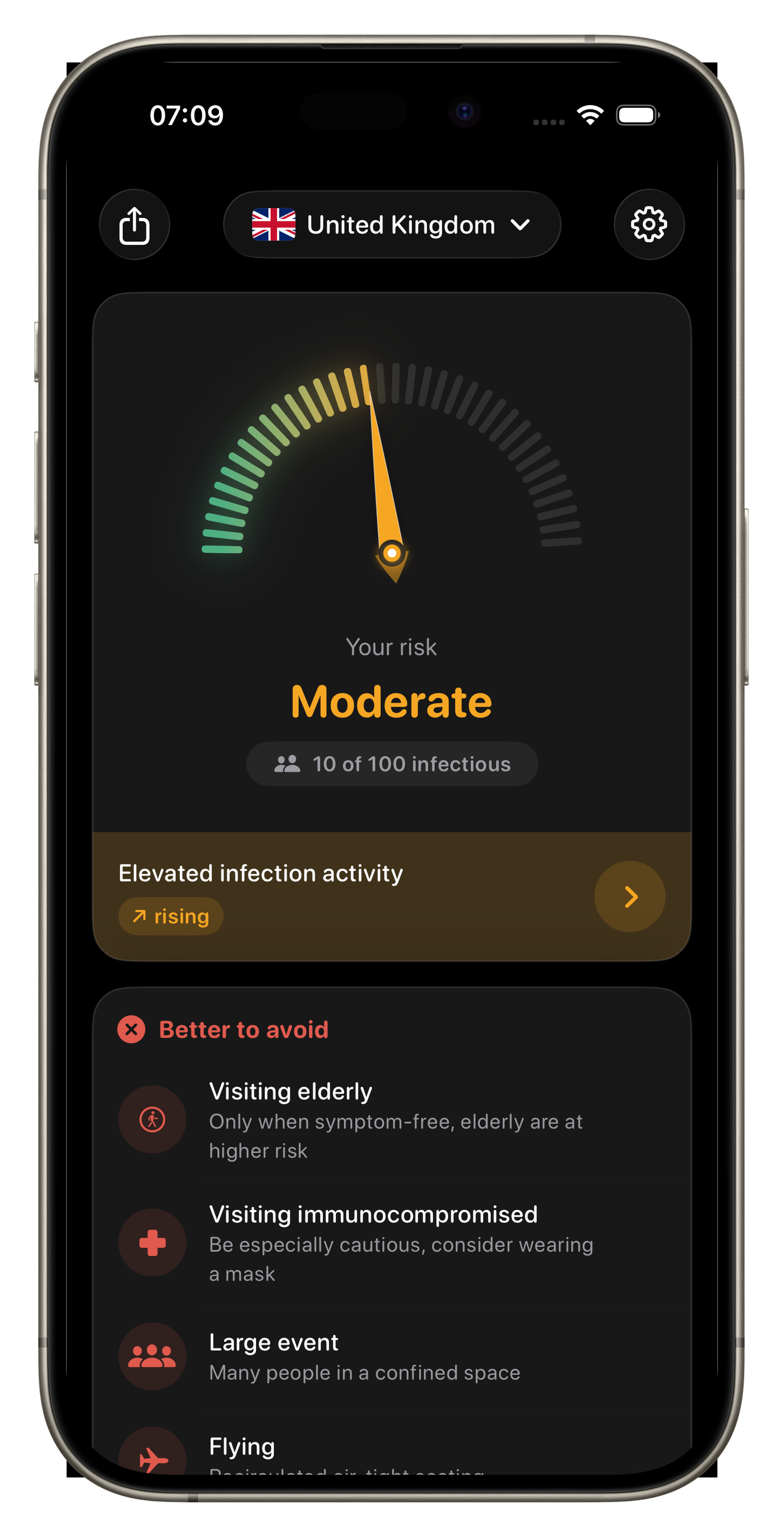
Here you only see the trend. In the app: exact incidence rates, “X out of 100 people infectious”, your personal risk based on age and pre-existing conditions, wastewater trends, 36 countries, home-screen widget.