RSV activity in the Netherlands
Current respiratory syncytial virus (RSV) activity in the Netherlands — based on ECDC ERVISS weekly data, set against the parallel flu and COVID-19 trajectories.
Current situation: RSV
In week 15 of 2026, activity of respiratory syncytial virus (RSV) in the Netherlands is low. The trend — derived from clinical surveillance — is falling. Over a four-week comparison, a clear decline is visible.
The classification is based on the ECDC ERVISS weekly reports, drawing on RSV indicators from NIVEL primary care surveillance and RIVM virological data (note that ECDC coverage of RSV positivity can be limited for the Netherlands). Seasonally, infection waves in the Netherlands typically peak between December and February; activity is usually markedly lower in spring and summer. How severe a given season becomes depends on the circulating virus variant and the population's immune status, among other factors.
Data sources and methodology
The current picture for the Netherlands is built on the European Respiratory Virus Surveillance Summary (ERVISS), published weekly by the European Centre for Disease Prevention and Control (ECDC). NIVEL together with RIVM is the national public-health authority that feeds ERVISS with sentinel primary care and virology data.
ECDC ERVISS
ERVISS is ECDC's weekly pan-European surveillance summary for influenza, SARS-CoV-2 and RSV. National authorities — in the Netherlands's case NIVEL together with RIVM — submit harmonised indicators every week, which ECDC publishes in a standardised dataset on Thursdays. Using ERVISS rather than each country's native portal ensures cross-country comparability.
ILI / ARI consultation rates and positivity
NIVEL together with RIVM operates a sentinel network of general practices that report weekly rates of patients consulting for influenza-like illness (ILI) or acute respiratory infection (ARI). A subset of patients is swabbed and tested by reference laboratories, producing pathogen-specific positivity rates for flu, SARS-CoV-2 and RSV.
Why this source
Combining consultation incidence with virological positivity yields a pathogen-specific weekly incidence signal (ILI × positivity / 100). This is the standard European methodology and provides a more robust view than either indicator alone — consultation rates capture illness burden, positivity confirms which pathogen is driving it.
Qualitative classification
The “low”, “moderate” and “high” categories follow seasonal reference values and epidemiological thresholds calibrated to match our classifications for other countries. The ILI × positivity / 100 product is scaled to comparable thresholds using a divisor of 3, which aligns European sentinel peaks with the consultation-equivalent scale used elsewhere. Data refreshes weekly when ECDC publishes the latest ERVISS update, typically on Thursdays.
Frequently asked questions
When is RSV season in the Netherlands?
RSV in the Netherlands typically returns in autumn, rises through November, and peaks between December and February before fading in spring. RIVM tracks RSV alongside flu and COVID-19 in its weekly respiratory-virus surveillance, with Nivel's sentinel GP data and hospital admission figures both contributing. Intensity and exact timing vary year to year, and post-pandemic seasons have at times started earlier.
Who is most at risk from RSV in the Netherlands?
The two highest-risk groups are infants, especially those under six months, premature babies, and children with heart or lung conditions, and older adults, particularly those aged 75 and above or with chronic respiratory or cardiac disease. In otherwise healthy adults and older children, RSV usually resembles a common cold and resolves within a week or two.
Are there RSV vaccines or antibody treatments in the Netherlands?
Yes. The Netherlands has introduced the long-acting monoclonal antibody nirsevimab for infants entering their first RSV season, following advice from the Gezondheidsraad and coordinated by RIVM. RSV vaccination is recommended for older adults in defined risk groups, and the Dutch immunisation schedule continues to evolve as new evidence on vaccines and maternal immunisation emerges.
How is RSV surveillance organised in the Netherlands?
RIVM tracks RSV by combining Nivel sentinel GP swabbing, virological testing at Erasmus MC and RIVM, and hospital admission data for severe acute respiratory infection. Paediatric bronchiolitis admissions are followed closely as an early signal of RSV pressure on hospital care. Results are published weekly and feed into the ECDC ERVISS platform for European comparison.
How does RSV differ from flu?
RSV and influenza both cause respiratory infections and co-circulate during Dutch winters, but their risk profiles differ. RSV is the leading cause of bronchiolitis in infants, while flu affects all age groups and is especially severe in older adults and those with chronic conditions. Symptoms often overlap, so a reliable distinction usually requires laboratory testing through sentinel or hospital networks.
Want the actual numbers?
You'll find them in the app.
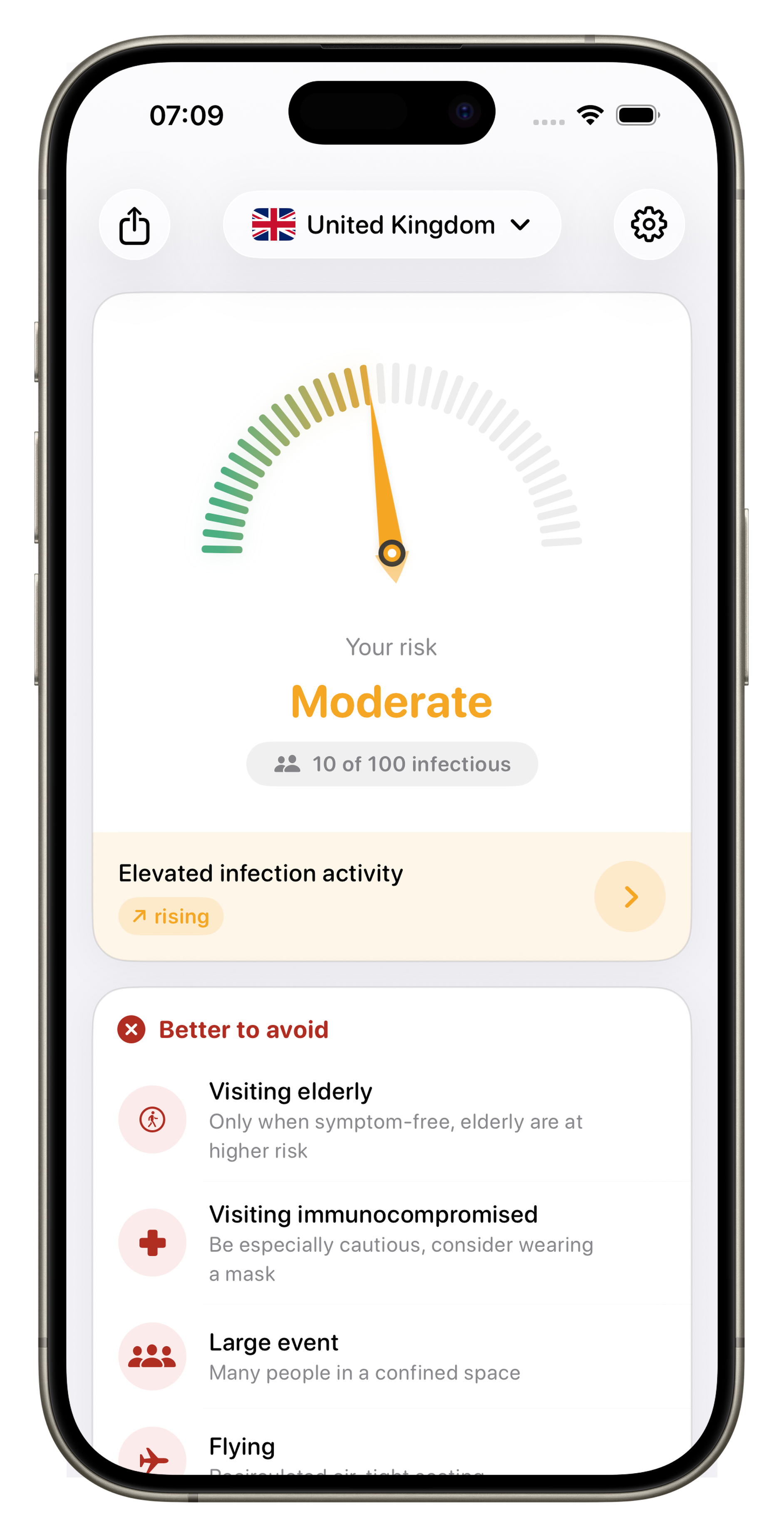
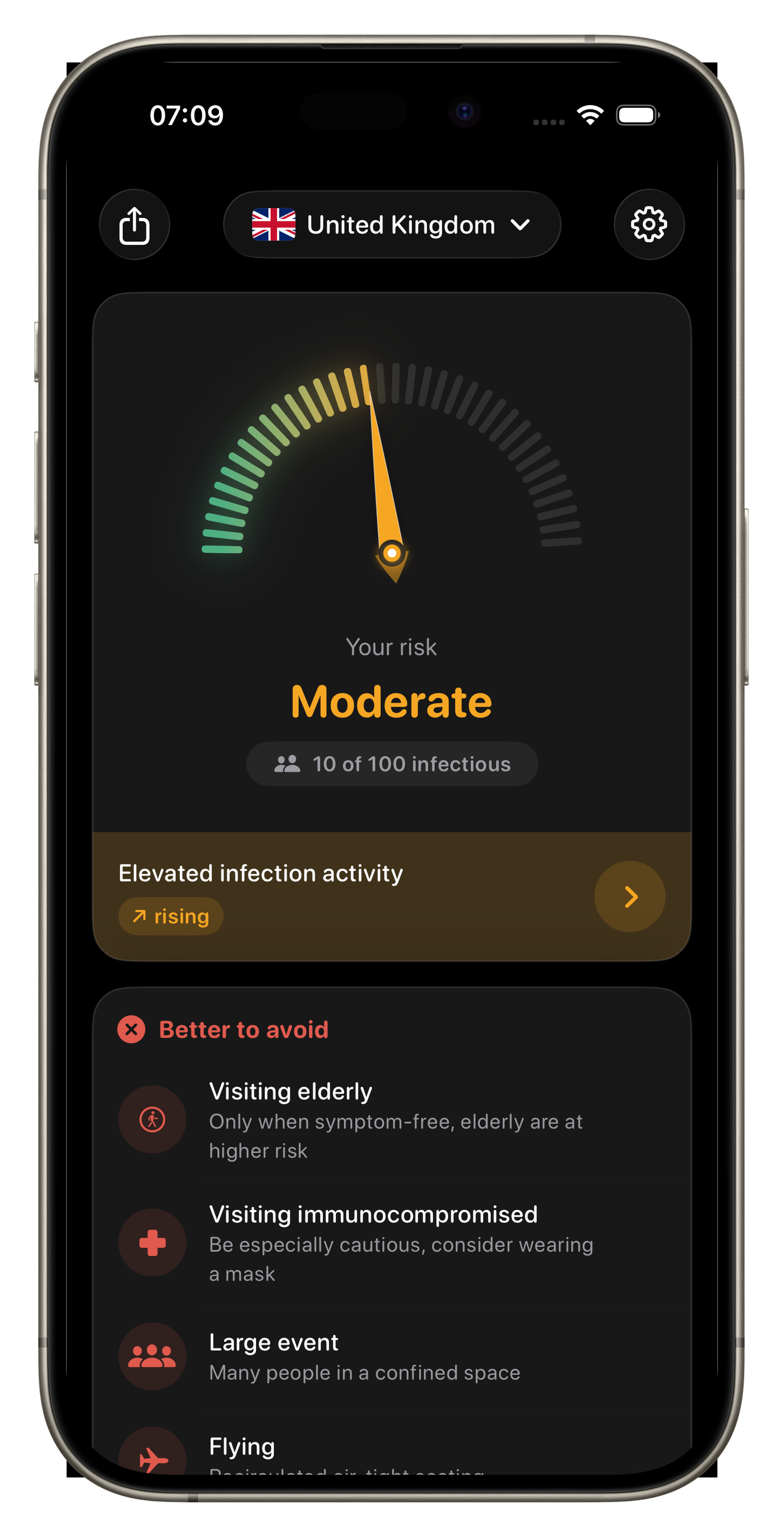
Here you only see the trend. In the app: exact incidence rates, “X out of 100 people infectious”, your personal risk based on age and pre-existing conditions, wastewater trends, 36 countries, home-screen widget.