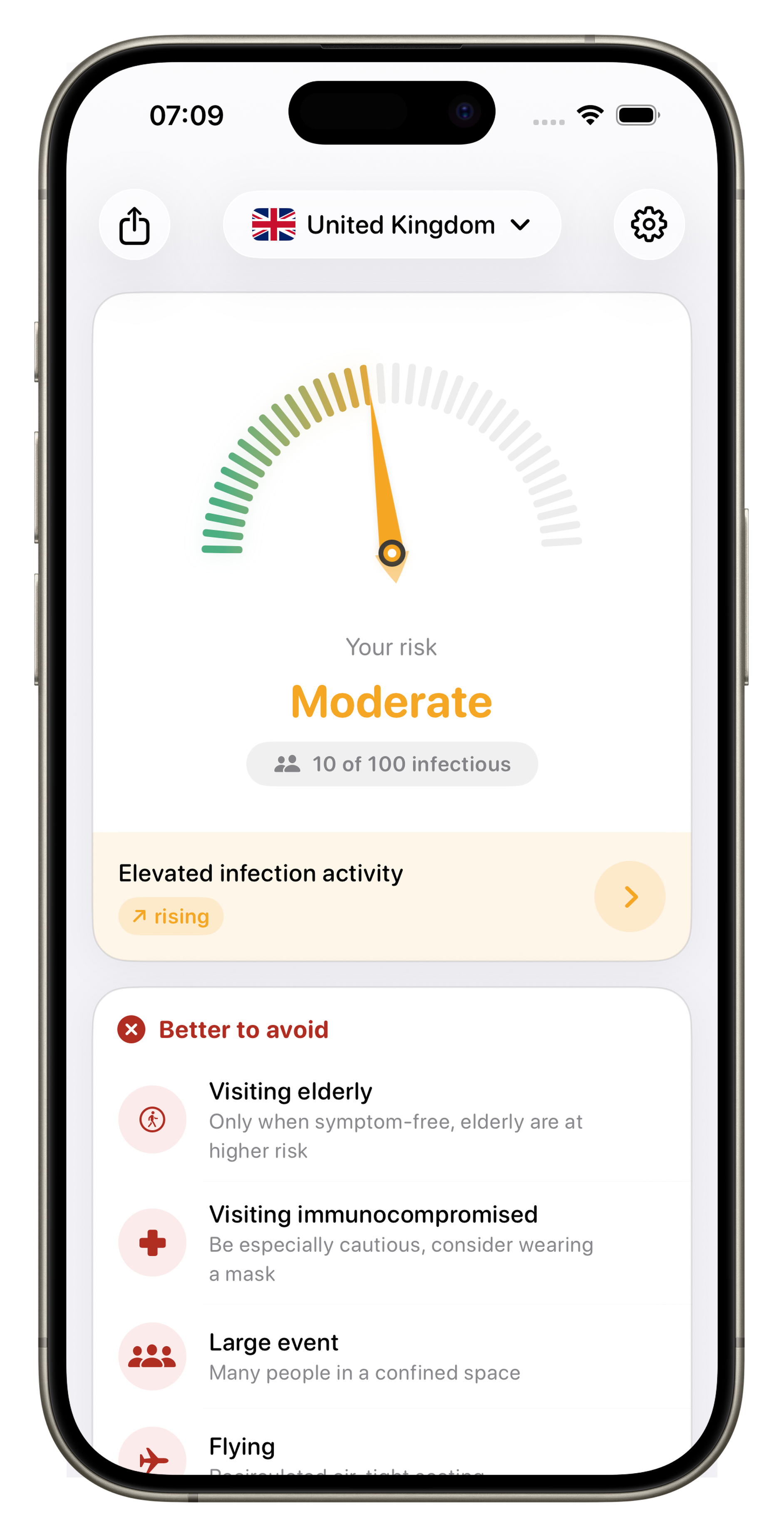
RSV activity in the United States
Current respiratory syncytial virus (RSV) activity in the US — based on CDC NHSN weekly hospital admissions and the RSV-NET surveillance system. Set against the parallel flu and COVID-19 trajectories.
Current situation: RSV
In week 15 of 2026, activity of respiratory syncytial virus (RSV) in the United States is low. The trend — derived from weekly hospital admission rates — is falling. Over a four-week comparison, a clear decline is visible.
The classification is based on CDC NHSN weekly RSV hospital admissions and the RSV-NET surveillance system. Seasonally, infection waves in the United States typically peak between November and February; activity is usually markedly lower in spring and summer. How severe a given season becomes depends on the circulating virus variant and the population's immune status, among other factors.
Data sources and methodology
The current picture for the United States is built on the CDC's National Healthcare Safety Network (NHSN) weekly hospital admissions data. NHSN collects laboratory-confirmed admission rates per 100,000 population for influenza, COVID-19 and RSV, submitted by participating hospitals nationwide. We rescale these hospitalization rates into a consultation-equivalent signal so the qualitative “low / moderate / high” categories are consistent with how we report other countries.
CDC NHSN (Hospital Respiratory Data)
NHSN is the CDC's national surveillance system for healthcare-associated infections. Since 2022, hospitals report weekly counts of confirmed influenza, COVID-19 and RSV admissions. We use the jurisdiction-level USA rates (admissions per 100,000 population per week), which give an unbiased picture of severe illness pressure on the healthcare system.
CDC FluView
CDC FluView is the long-running weekly flu surveillance report, drawing on outpatient ILI visits via the ILINet sentinel network, public health laboratory results, and hospitalization data. While our headline level is driven by NHSN, FluView provides the context for how a season compares to the typical seasonal curve.
Why hospitalization rates
Unlike clinic visits or self-reports, hospital admissions remain reliable across changes in testing behaviour and reporting practices. They reflect severe outcomes — the load that matters most for health-system capacity — and are reported with a roughly one-week lag.
Qualitative classification
The “low”, “moderate” and “high” categories follow seasonal reference values and epidemiological thresholds calibrated to match our classifications for other countries. Hospitalization rates are scaled to consultation-equivalent incidence using pathogen-specific conversion factors derived from typical seasonal peaks in both systems. Data refreshes weekly when the CDC publishes the latest NHSN update, typically late in the week.
Frequently asked questions
What is RSV?
Respiratory syncytial virus (RSV) is a common respiratory virus that causes infections ranging from mild cold-like symptoms to serious lung disease. Almost all children get RSV by age two. In healthy adults and older children, RSV typically causes a mild to moderate cold. But in infants, older adults, and immunocompromised people, it can cause bronchiolitis, pneumonia, and hospitalization.
When is RSV season in the US?
The RSV season in the United States typically runs from fall through early spring, with activity usually peaking between November and February. Since the COVID-19 pandemic, RSV patterns have become less predictable — seasons have shifted earlier or emerged outside their usual window in some years. The CDC's RSV-NET surveillance system tracks weekly hospital admission rates to identify when activity crosses into elevated ranges.
Who is most at risk from RSV?
The highest-risk groups are premature infants, babies under six months old, and adults aged 60 and older. People with heart or lung disease, immune compromise, or other chronic conditions are also at elevated risk of severe RSV. In most healthy adults, RSV causes a cold-like illness that resolves on its own within one to two weeks.
Is there an RSV vaccine?
Yes, as of 2023 the FDA has approved RSV vaccines for adults aged 60 and older and a maternal RSV vaccine for pregnant women. Additionally, nirsevimab (Beyfortus) is a long-acting monoclonal antibody recommended for infants entering their first RSV season. These interventions have significantly reduced the risk of severe RSV in the groups most likely to need hospital care.
How is RSV different from the flu?
RSV and influenza can cause similar-looking respiratory symptoms, but they are different viruses with different risk profiles. RSV disproportionately affects the very young and the very old, while flu affects all age groups — though it's still most severe in the elderly and those with chronic conditions. A laboratory test is usually needed to distinguish between them reliably. Both circulate simultaneously during the US winter respiratory season.
Want the actual numbers?
You'll find them in the app.
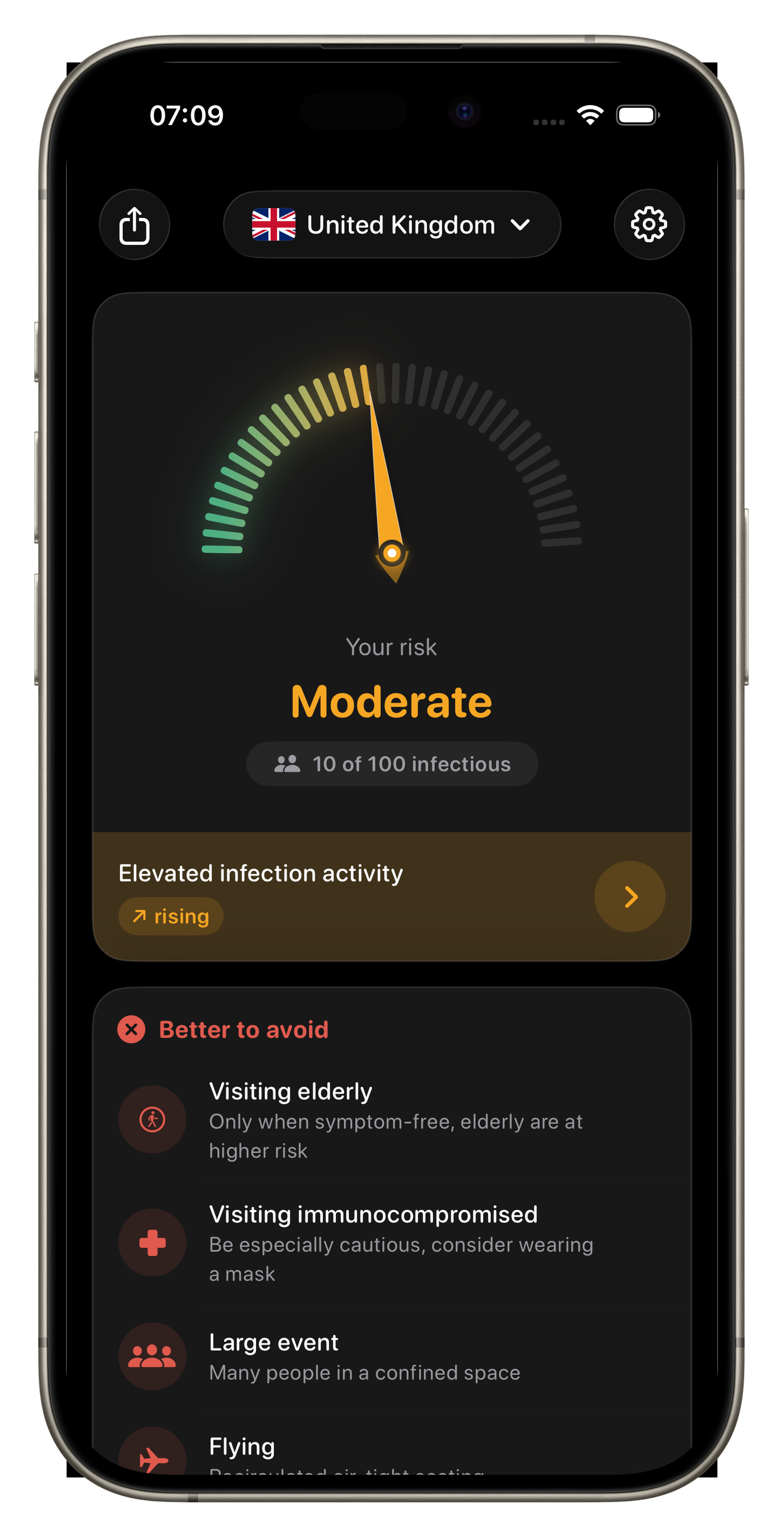
Here you only see the trend. In the app: exact incidence rates, “X out of 100 people infectious”, your personal risk based on age and pre-existing conditions, wastewater trends, 36 countries, home-screen widget.